Itera at NFW 2026
Nordic Fintech Week 2026 - five takeaways
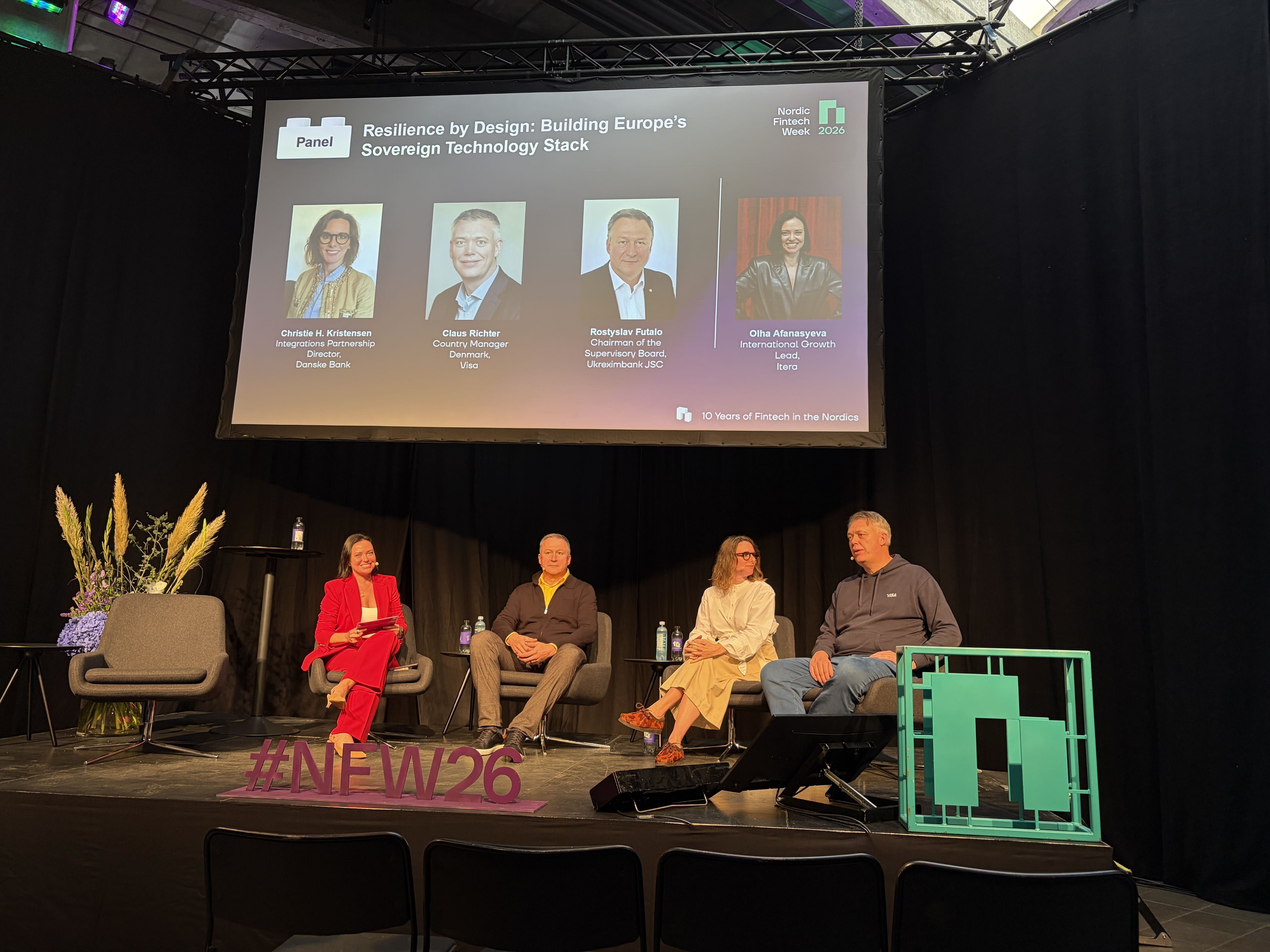
Three days, ten themes and a very different conversation about the future of banking, finance and insurance. Here's what we heard and what we think it means for the years ahead.
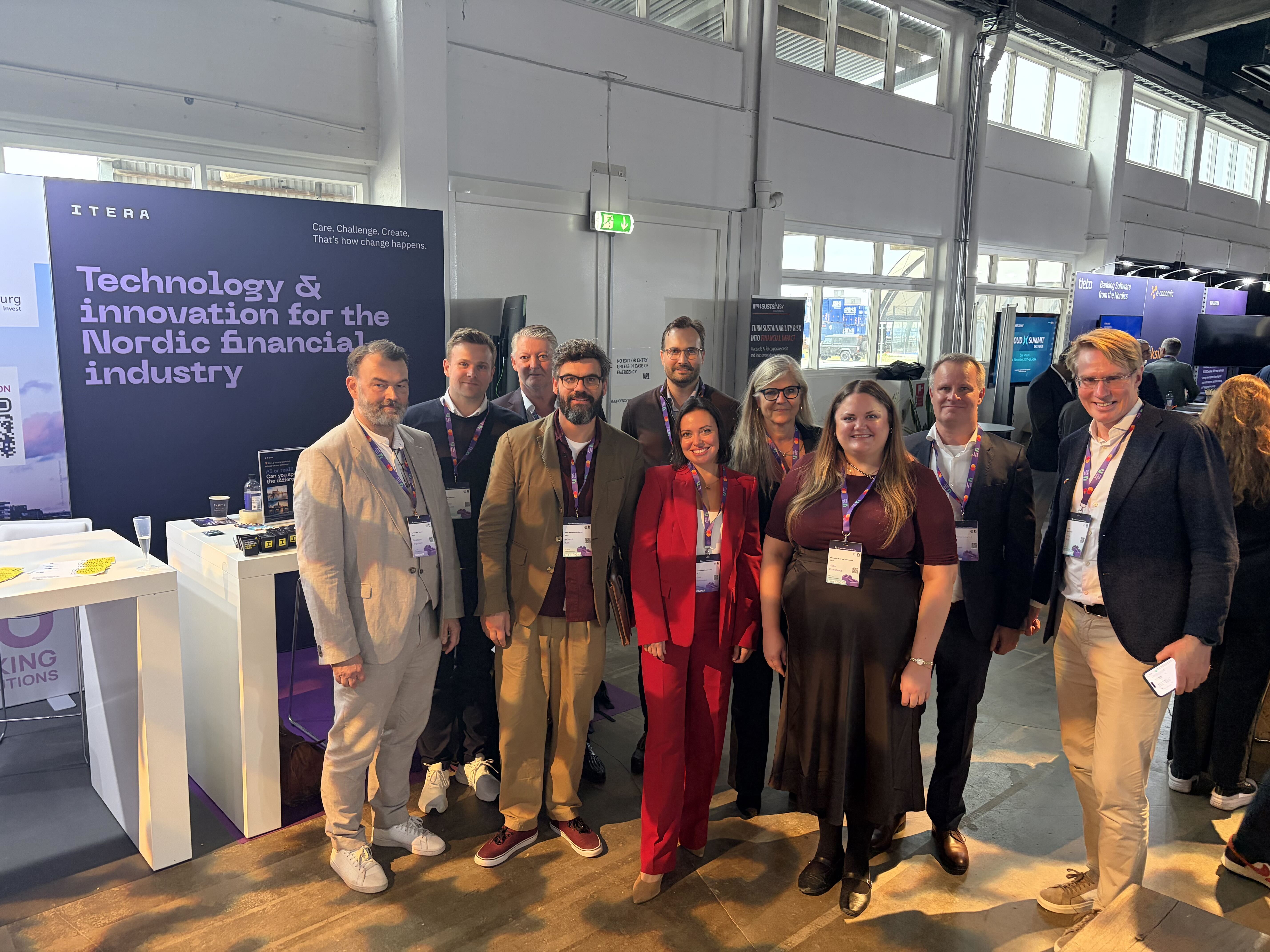
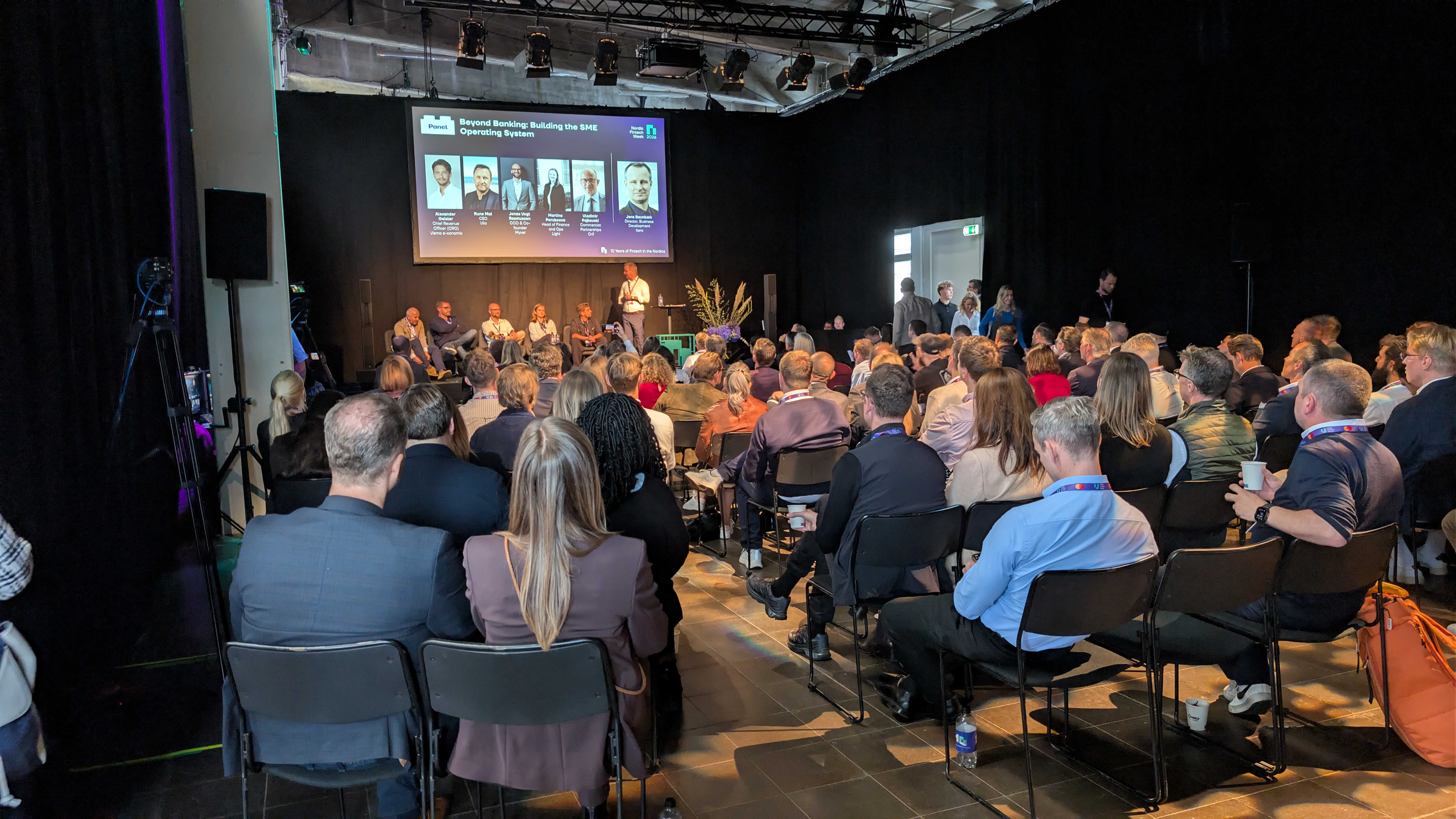
Nordic Fintech Week has become the place where the Nordic and international perspectives on financial services meet, not as a keynote broadcast, but as a genuine exchange among banks, insurers, fintechs, regulators, and technologists.
Itera was once again a sponsor. We went in curious. We came out with a clearer view of what is genuinely changing, and where the industry is still talking ahead of its own reality.
If there was one topic that dominated Nordic Fintech Week 2026, it was AI. But the conversation has changed. The focus is no longer on experimentation and pilots. It's on a much more mature question: how do we create lasting business value with AI at scale?
The organisations moving fastest are not necessarily the ones deploying the most AI. They're the ones rethinking how they work, how they serve customers, and how they create value.
#1
AI is no longer a pilot project. It's infrastructure.
Not long ago, conference agendas were filled with proof-of-concepts, experiments and discussions about what AI could do. Today, the conversation has shifted towards governance, skills, operating models and scaling. AI is increasingly being treated in the same way as cloud, mobile technology or data platforms: not as a separate initiative, but as a core capability organisations need to remain competitive. The question is no longer whether to adopt AI. It's how to embed it responsibly and effectively across the business.
#2
The biggest value comes from redesigning processes
One of the clearest messages throughout the week was that many organisations are still trying to layer AI on top of existing ways of working.
The leaders are taking a different approach. Rather than optimising today's processes, they're redesigning them from the ground up. They are rethinking workflows, roles and customer journeys, then using AI to make those new processes faster, simpler and more effective. AI on its own rarely creates transformative value. AI combined with new ways of working often does.
#3
AI is a means, not an end
Interestingly, some of the most compelling presentations spent very little time discussing AI itself. Instead, the focus was on outcomes: shorter processing times, better customer experiences, higher productivity and entirely new sources of revenue. That's an important shift. Successful organisations are not pursuing AI because it's the latest technology trend. They're using it to solve real business challenges and create measurable value for customers, employees and shareholders. Technology matters. Outcomes matter more.
#4
AI-native providers are changing the market
Another trend we observed was the rise of AI-native vendors offering solutions that already address a significant share of common business needs. Instead of requiring large-scale implementation programmes before value can be realised, these providers deliver solutions that can accelerate adoption and shorten time-to-value. For banks, insurers and fintech companies, this creates opportunities to move faster. At the same time, it challenges traditional delivery models and expectations across the industry. As AI matures, the balance between building, buying and partnering is becoming an increasingly important strategic decision.
#5
Competitive advantage is moving from technology to execution
As AI becomes more accessible, the technology itself is becoming less of a differentiator. What increasingly separates leaders from followers is the ability to turn technological potential into organisational change. That requires more than technology. It depends on leadership, skills, data foundations, governance, operating models and, perhaps most importantly, adoption. The organisations that succeed won't necessarily be those with access to the most advanced AI models. They'll be the ones best equipped to put them to work.
We spoke with Christie Holm Kristensen, Strategic Integration Partnerships Director of Danske Bank about the key themes emerging from this year’s Nordic Fintech Week. Together, we explore what resilience means in practice as financial institutions navigate geopolitical uncertainty, technological change, growing cyber threats, and rapid innovation.
(The conversation is in Norwegian and Danish).
.png)
The bigger picture
Perhaps the most important takeaway from Nordic Fintech Week 2026 is that AI has moved from being an innovation topic to becoming a transformation topic. The challenge is no longer adopting AI. The challenge is building organisations that can continuously create value from it.At Itera, we see the same pattern across industries. The greatest opportunities emerge when technology, people, processes and business goals evolve together. AI can accelerate change, but lasting impact comes from redesigning the organisation around the possibilities it creates.
Put simply: the winners of tomorrow won't be the organisations using the most AI. They'll be the ones most capable of turning AI into better experiences, better decisions and better business outcomes.
Itera's view
The Nordic region has a habit of building financial services people actually trust. That habit is an asset in an AI-driven industry — but only if we keep pace on execution. Our approach hasn't changed: we care about the people who use these systems, we challenge the assumptions behind them, and we create the technology that makes the difference real.
We work with banks, insurers, and financial services companies that want to move forward. For over thirty years, we’ve helped our customers modernise core IT systems, create standout customer experiences, fight financial crime, and support the shift to greener finance.
Get in touch
Let's talk about data and AI