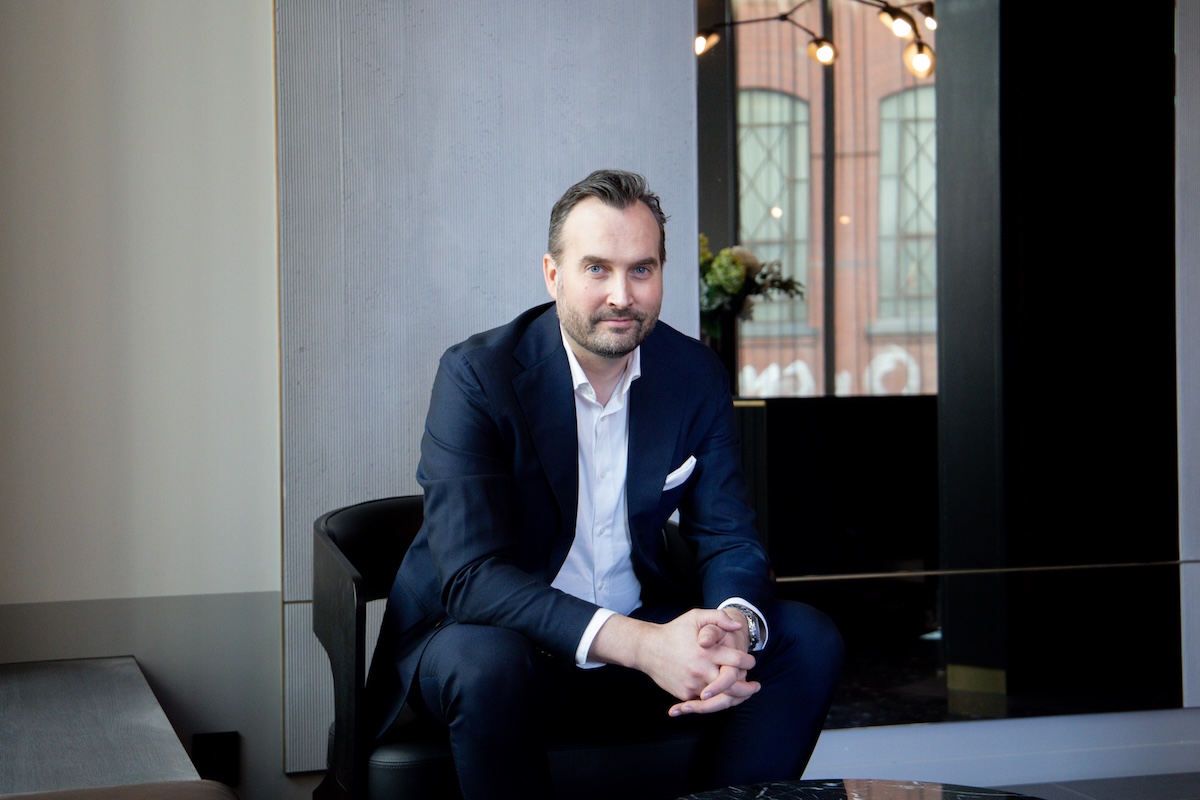
Lasse Maugesten

The Intertwined Relationship Between Creativity and Resilience

Creativity is defined as the ability to think about a challenge or a problem in a new or different way, or the ability to use the imagination to generate new ideas. Resilience is defined as the ability to move forward from setbacks or failures. They may initially seem unrelated. However, upon closer examination, it becomes evident that these two concepts are closely intertwined.

Written by Lasse Maugesten, Principal Business Designer at Itera

For all working in the private or public sector resilience is a relevant topic, especially in the context of the pandemic, the war in Ukraine, the following energy shortage, and the looming economic crisis, to name but a few. While some may express fatigue with the concept of constant change, we see that there is a notable connection between how some companies thrive in a world of constant change and how others fall behind. 

The key differentiator lies in how companies approach and embrace change

Resilient organizations have a growth mindset, viewing change as an opportunity for learning and growth. They see that the inflexible machine-management model we inherited from the industrial age is at odds with today’s complex and unpredictable world. In contrast, companies that resist change or are unable to adapt find themselves struggling to keep up with the evolving demands of their customers, the market, and the broader socio-economic landscape. 

Creativity and resilience require mental flexibility

Thinking creative involves considering multiple perspectives, challenging assumptions, and generating ideas that may not be immediately obvious. Similarly, resilience necessitates adapting to new circumstances, reframing challenges as opportunities, and finding new solutions when old ones fail. This mental flexibility is supported by cognitive processes common to both creativity and resilience.  

– For a business designer in Itera, the concept of creative resilience is second nature when navigating the complexities of their work. However, for some traditional business developers they still struggle with the notion of not being able to predict and calculate every possible scenario.

The world has become volatile, uncertain, complex and ambiguous

When striving for a new idea, new strategy, or new pathways to growth, one must be comfortable with not knowing all the answers immediately. Similarly, when facing a setback, one must be able to tolerate the discomfort of uncertainty regarding not knowing the outcome. This means that both creativity and resilience involve the ability to shift focus between different levels of analysis. As an example, being able to zoom in on the details of a problem or situation while also zooming out to see the bigger picture. This enables us to connect seemingly unrelated ideas or identify patterns that others may miss.  

– Rather than being paralyzed by the fear of the unknown, creative resilience empowers us to embrace ambiguity and explore new possibilities. It encourages us to challenge assumptions, view a challenge from a different perspective, and adapt our strategies as needed.

Creativity is a driving force behind identifying new pathways to growth

We believe that by fostering a culture that supports creativity, businesses indirectly strengthen resilience. As an example, when our consultants are encouraged and enabled to think and work creatively, they develop the mindsets and skillsets essential for resilience and innovation. This enables us to adapt to changing market conditions faster, identify new opportunities for growth, and stay ahead, not just keeping up. This not only enhances their problem-solving skills but also opens the door to innovative ideas and new pathways to growth.  


In the end, the concept of creative resilience is not about abandoning planning or foresight

It's about recognizing that there will always be elements beyond our control and that we will not always have all the answers. The role of creativity in a business process is to serve as a catalyst for problem-solving, identifying new pathways to growth and challenging traditional strategic thinking. 

Through our collaborative approach, we work closely with clients to identify their unique strengths, uncover hidden opportunities, and develop new pathways to growth. We experience that challenging traditional thinking and encouraging creative problem-solving, we empower our clients to navigate uncertainty with confidence and seize new avenues for growth.