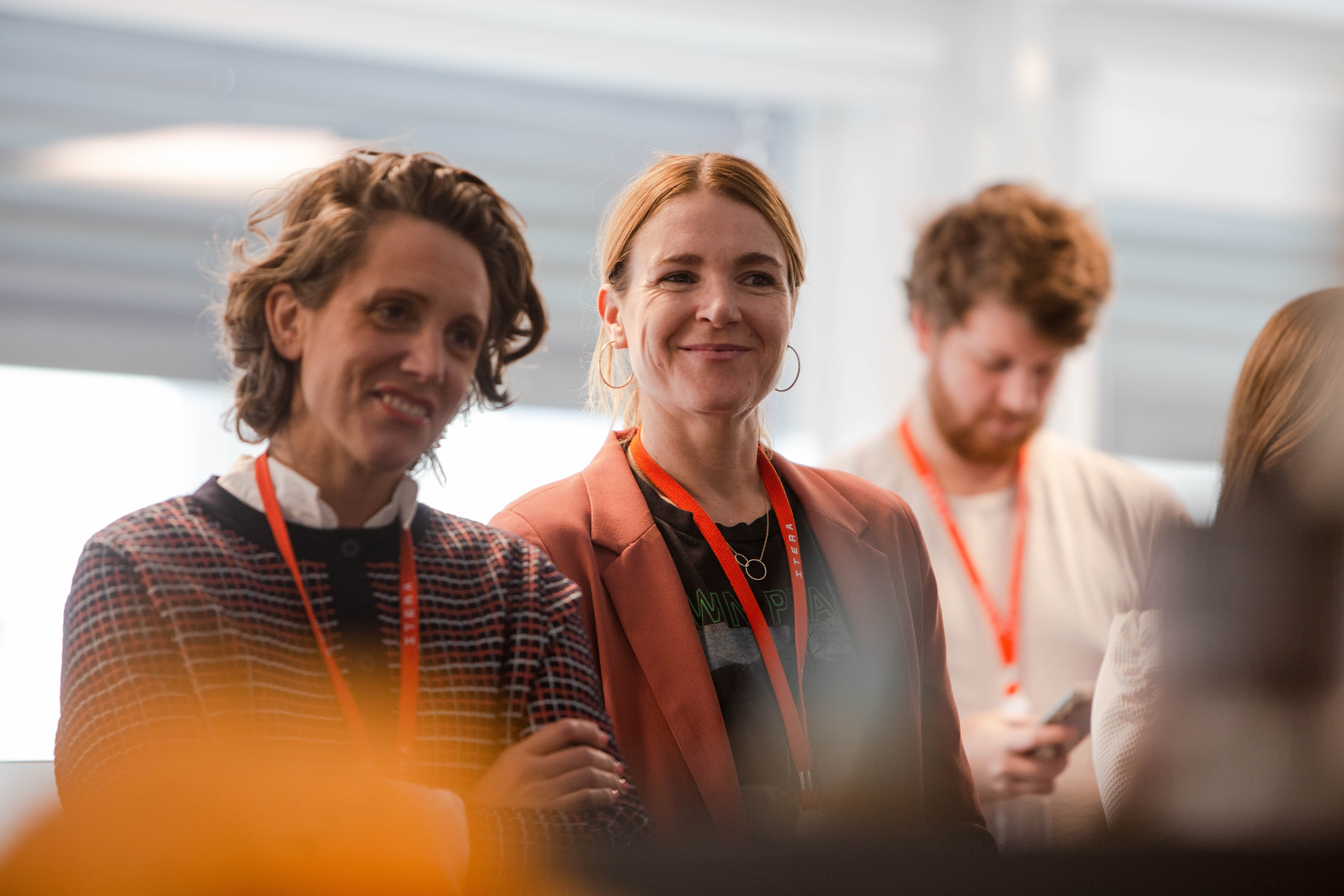
Paneldebatt Arendalsuka

Business Development in Ukraine Can Make Norway a Leading Digital Nation

The ongoing war in Ukraine has garnered significant international attention, and many countries want to help — not only humanitarian and militarily but also through trade. This topic was a central point of discussion when Itera hosted a panel debate during Arendalsuka 2024, where leaders from various sectors gathered to explore how Norway and our business community can strengthen Ukraine through trade and investments.

Norway's Duty and Opportunities in Ukraine: Minister Cecilie Myrseth's Key Points from the Panel Debate

During the panel debate, Minister of Trade and Industry Cecilie Myrseth emphasized Norway's responsibility and opportunities concerning Ukraine. She stressed the importance of supporting Ukraine in reconstruction efforts and in ensuring the country's combat capability since a well-functioning society is crucial for winning the war.

Many Norwegian companies have been in Ukraine for a long time, and Myrseth believes it is Norway's duty to contribute even more. She also highlighted that authorities must support businesses in this work—a point made clear during the Ukraine Recovery Conference in Berlin earlier this year when many Norwegian companies demonstrated their commitment.

“Norwegian businesses take risks because it’s about more than trade; it’s about contributing. Our freedom is at stake; therefore, we must stand united. When the war ends — and hopefully Ukraine has won — the country will have significant infrastructure, energy, housing, and business development needs — areas where Norway can contribute significantly,” she said.

Myrseth urged not to give up hope for a future for Ukraine and mentioned actors like Itera, NUCC (Norwegian-Ukrainian Chamber of Commerce), and Innovation Norway as important partners in this effort.

Cecilie Myrseth

– Norwegian businesses take risks because it’s about more than trade; it’s about contributing. Our freedom is at stake; therefore, we must stand united.

Cecilie Myrseth

Minister of Trade and Industry

The Long-term Role of the Private Sector

Idar Kreutzer from NHO emphasized that private investments are indispensable for rebuilding Ukraine. He pointed out that extensive reconstruction efforts require substantial financial resources — equivalent to three Marshall Plans.

“This is long-term building of societies and markets,” said Kreutzer. It is, therefore, clear that public budgets alone cannot bear these efforts; private engagement from the private sector is crucial.

Kreutzer added that the goal for Ukraine is to become an integrated value creator within Europe. This vision requires Norwegian companies to think beyond short-term profits and view their contributions as fundamental for a free and prosperous future for both nations.

Leveraging Technology and Innovation

During the panel debate, Itera’s CEO Arne Mjøs expressed his strong desire to contribute to addressing Ukraine’s situation with a focus on what’s at stake for security. He pointed out that private capital can keep things moving behind the front lines while emphasizing Itera's role in delivering technology and consulting services based on their extensive expertise regarding Ukraine.

Mjøs highlighted the importance of corporate social responsibility and praised the minister's commitment to Ukraine.

Paneldebatt Arendalsuka

Mjøs missed a sense of urgency from the private sector and pointed out that much of the effort could come from outside traditional support mechanisms, with IT playing a key role. He mentioned Ukraine's rapid growth in the IT sector and its ability to build things from the ground up as something Norway can learn a lot from. With significant potential in natural resources and wind resources, he sees Ukraine as an important part of Europe and as a future NATO member. The companies that are active now will be remembered when the country is rebuilt.

One critical area where Norway can have significant influence on Ukraine is through technology transfer and digital innovation. As discussed during the event, there is a growing need for IT professionals in Norway — a gap that Ukrainian talent could help fill due to their rapid pace of digitalization, according to Mjøs.

Norwegian companies are encouraged to start small, learning from initial engagements and then scaling based on their experiences. This approach aligns with innovative solutions already emerging within Ukraine aimed at overcoming war-related challenges.

Building Infrastructure Together

Rebuilding infrastructure — such as roads, energy systems, and housing — remains a top priority after the war. Discussions revealed that continuous reconstruction is essential not only for maintaining economic stability but also as part of the ongoing war efforts against Russia.

Partnerships between Norwegian firms and Ukrainian companies can accelerate these rebuilding projects while fostering stronger bilateral relations based on shared goals of peace and prosperity.

Kjartan Tveitnes, managing director of the Norwegian-Ukrainian Chamber of Commerce (NUCC), emphasizes that the chamber has 160 members, 60 of whom are Ukrainian. He points out the need for more orders for Ukrainian members, who had more before the war. Despite challenges, there was an impressive 70% growth in purchases of Ukrainian goods and services last year. Tveitnes encourages Norwegian actors to support by purchasing Ukrainian products and services.

Get in touch

For more insights into how your business can engage with initiatives supporting Ukrainian trade, please contact us here: